Picture this. You match with someone, and within 48 hours they're texting you paragraphs. By week two, they're calling you their soulmate. By week three, they've already booked a couples' trip and introduced you to their mum. Your friends are screaming "run" whilst your brain is flooded with dopamine and your heart is doing something completely unhinged.
Here is the plot twist nobody tells you: that overwhelming, electric, "finally someone who gets me" feeling? It might not be romance. It might be love bombing — and once you know what to look for, you literally cannot unsee it.
This article breaks down exactly what love bombing is, why your brain falls for it every single time, and what to actually do if you think you're in the middle of it. No fluff. Just the honest, researched stuff you actually need.
Picture this. You match with someone, and within 48 hours they're texting you paragraphs. By week two, they're calling you their soulmate. By week three, they've already booked a couples' trip and introduced you to their mum. Your friends are screaming "run" whilst your brain is flooded with dopamine and your heart is doing something completely unhinged.
Here is the plot twist nobody tells you: that overwhelming, electric, "finally someone who gets me" feeling? It might not be romance. It might be love bombing — and once you know what to look for, you literally cannot unsee it.
This article breaks down exactly what love bombing is, why your brain falls for it every single time, and what to actually do if you think you're in the middle of it. No fluff. Just the honest, researched stuff you actually need.
So What Even Is Love Bombing? 💣
Love bombing is when someone showers you with attention, affection, flattery, and grand romantic gestures — especially way too early in a relationship. We are talking constant good morning texts, "I've never felt this way about anyone," surprise gifts, future planning before you've even had a DTR conversation. All of it. At once. At full volume.
The term actually comes from cult psychology research in the 1970s — cults used to overwhelm new recruits with love and belonging to create loyalty fast (Lifton, 1987). Researchers later noticed the same pattern cropping up in romantic relationships, particularly ones that turned controlling or harmful.
And here is the thing that makes it so hard to clock: it is designed to look exactly like devotion. It mimics all the feelings of being genuinely adored. The difference between love bombing and someone who is just really into you comes down to two things — pace and pressure. A person who genuinely likes you will let you breathe. A love bomber gets anxious, cold, or dramatic the moment you do.
The Psychology Behind Love Bombing — 3 Things Science Actually Says 🧠
It Could Be Related to Narcissistic Traits 🪞
Research has consistently linked love bombing to narcissistic personality traits. Here is how it typically plays out: the narcissistic partner puts you on a pedestal in the early stages — you are perfect, you are different, you are the one— and then, the moment you fail to live up to that impossible image, the whole thing flips (Bushman & Baumeister, 1998). Love bombing is basically the idealisation phase cranked up to eleven.
A study by Strutzenberg et al. (2017) found that people higher in narcissism were significantly more likely to accelerate intimacy and pile on the flattery early in relationships — exactly the behaviour that love bombing describes. It is not about you being special. It is about them creating dependency before you have had the chance to see the full picture.
Uncomfortable truth? Yes. Useful to know? Absolutely.
It Activates Your Brain’s Dopamine System 🧬
Here is the part that genuinely explains why smart, self-aware people still fall for this. Early romantic attraction activates the brain's dopamine system — the same circuitry behind other reward-driven behaviours (Aron et al., 2005). Love bombing essentially hacks this system by flooding it with stimulation. The constant texts, the grand gestures, the feeling of being chosen — all of it hits the reward centres of your brain like a slot machine that keeps paying out.
So when it eventually stops — and it does stop — the withdrawal is real. You are not dramatic. You are not weak. Your actual neurochemistry got hijacked, and now it is readjusting. That is biology. Not a personality flaw.
It Fast-Tracks Attachment in a Way That Feels Like Fate 🎯
Attachment theory tells us that humans are wired to bond with people who make us feel safe and seen — and that this process is especially powerful when we are lonely, transitioning, or coming out of something painful (Bowlby, 1969). Love bombing speaks directly to that wiring. By positioning themselves as the person who finally understands you, the love bomber triggers rapid attachment that would normally take months to develop naturally.
By the time the dynamic shifts — and it usually does — you are already emotionally in deep. That is not naivety. That is a completely predictable psychological response to an extraordinarily intense experience.
But Wait — How Do You Know If It Is Love Bombing or Just… Vibes? 5 Signs of Love Bombing🚦
Not every whirlwind romance is a red flag. Some people are genuinely enthusiastic and emotionally available. Here is how to tell the difference.
Signs it might just be genuine chemistry ✅
1)The intensity feels exciting but not pressurising
2)They are completely fine when you need space or want to slow down
3)Their affection grows with actual knowledge of you as a person
4)Future plans feel collaborative, not like something being decided for you
Signs it might be love bombing 🚩
1)Every time you pull back slightly, they pour it on harder
2)You feel vaguely guilty for not matching their energy
3)"Soulmate" language before you even know their coffee order
4)Warmth gets switched off like a tap when you set a boundary
5)You feel overwhelmed more than you feel happy — but cannot quite explain why
The question to sit with: Does their affection feel like a gift, or does it feel like a test you could fail?
5 Things to Actually Do If You Think You Are Being Love Bombed 🤔
1) Stop Explaining Away the Ick 🌊
If something feels off, that is information. Research on social intuition shows that our gut-level unease often registers relational patterns before our conscious mind has caught up (Damasio, 1994). You do not need to be able to articulate exactly what is wrong. The fact that something feels wrong is enough reason to slow down and pay attention. Stop talking yourself out of your own instincts.
2) Set a Small Boundary and Watch What Happens ⛔
This is honestly the most revealing thing you can do. Tell them you need a quiet evening to yourself. Say you are not ready to meet their family yet. Nothing dramatic — just something small and completely reasonable. Then watch the reaction carefully. Someone who genuinely cares about you will be fine with it. A love bomber will react with hurt, guilt-tripping, sulking, or immediately doubling down on the affection to pull you back in. That reaction tells you everything.
3) Do Not Let Them Become Your Whole World — Yet 💬
Love bombing works partly because it accelerates the process of making a new partner your primary emotional anchor. Suddenly your best friends feel less important. Your plans feel less interesting. They have become the main character of your life in about three weeks. Deliberately maintaining your existing friendships and talking openly to people who knew you before them is one of the most protective things you can do for yourself. It is not disloyal. It is essential.
4) Deliberately Slow the Pace — You Are Allowed To 🐢
Say it with us: you are always entitled to set the pace of your own relationship. If someone's excitement is genuine, slowing down will not kill the connection — it will just let it grow on honest, solid ground. If slowing down is consistently met with resistance, guilt, or drama, that resistance is your answer. A relationship that cannot survive a slower pace was never going to survive the long run.
5) Get Real About Your Own Patterns, Too 🪞
Sometimes we are more susceptible to love bombing at certain points in our lives — post-breakup, after a period of loneliness, when we are craving validation. Research on attachment styles suggests that people with anxious attachment may be especially likely to experience early intensity as the security they have always wanted (Levine & Heller, 2010). This is not a reason to beat yourself up. It is a reason to approach intense new connections with gentle self-awareness — asking yourself whether you are drawn to this person, or to the feeling they are giving you.
There is a big difference.
The Honest Takeaway 💡
Love bombing is not always calculated evil. Some people do it without fully realising — acting out patterns rooted in their own fears, insecurities, and unprocessed emotional stuff. But whether it is conscious or not, the effect on you is real: confusion, fast-tracked dependency, and — when the intensity eventually fades — a particularly disorienting kind of heartbreak.
The most protective thing you can carry into any new relationship is a clear, unshakeable sense of what you actually deserve. And here is what you deserve: someone whose affection builds gradually, makes space for you, and does not require you to keep proving yourself.
Real love does not need to rush. It is not trying to win you before you notice the cracks. It is just… steady. And steady, when you have experienced the alternative, is honestly the most underrated thing in the world.
MindForest App: Gently Unravelling the Roots of Love Bombing and Relationship Trauma
Becoming aware of love bombing and its emotional toll is not just about spotting a manipulative partner — it is about finally understanding why the overwhelming rush of someone's attention felt so impossible to resist. Healing begins when you can recognise your attachment patterns and why intense, fast-moving connections pulled you in so powerfully, without judging yourself for not seeing it sooner.
🌿 ForestMind AI
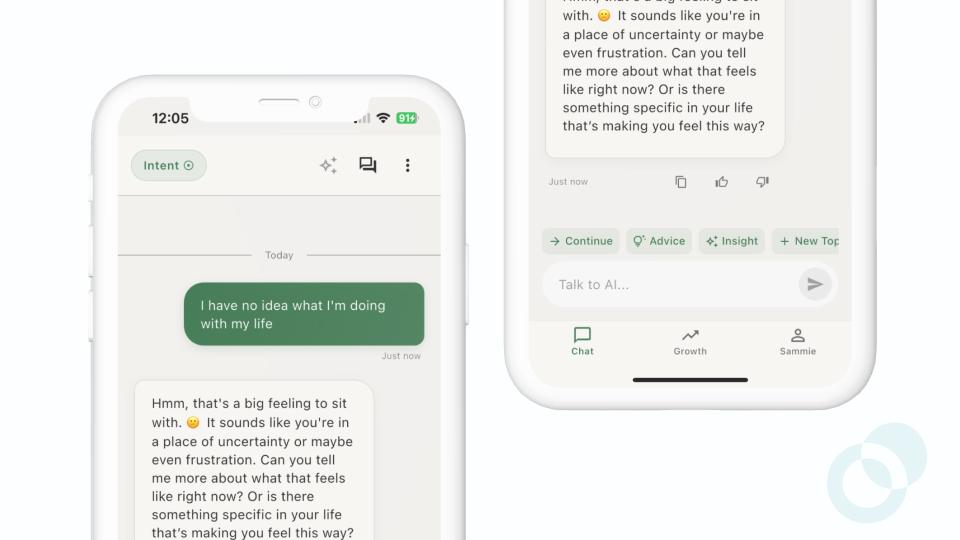
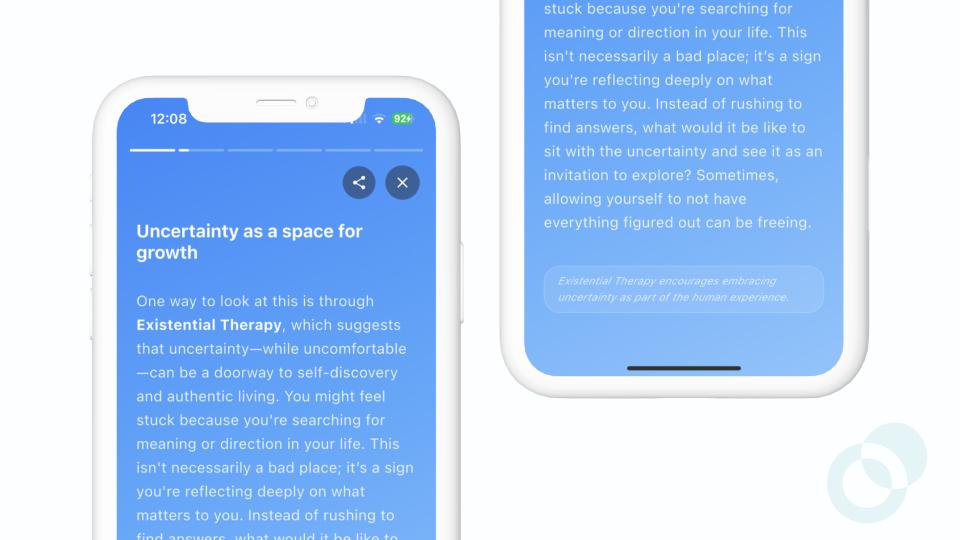
Helps you reflect on why love bombing felt so intoxicating, exploring your emotional triggers and inherited beliefs about love — so you can see which cravings for being "chosen" belong to the past, and which healthy, grounded connections you are ready to build.
🪞 Insight Journal
Track moments when the overwhelming affection felt electric, and moments when something quietly felt off. By logging these experiences, you make the cycle of love bombing visible — allowing you to spot the pattern without forcing conclusions or reliving the confusion of being swept off your feet.
🧠 Psychological Assessments
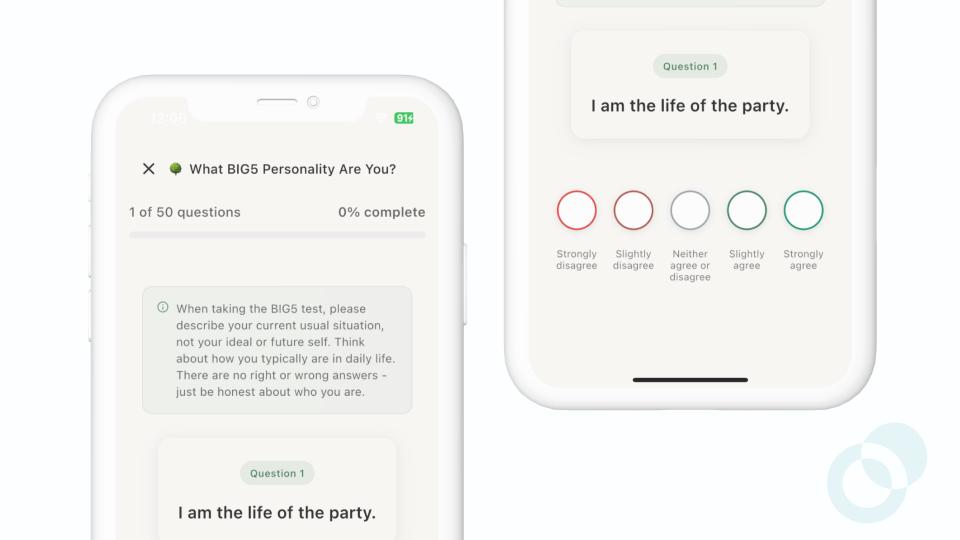
Explore the connection between love bombing and your attachment style. Our assessments help you understand how your response to intense early affection was shaped by early experiences — helping you shift from chasing that initial high to building secure, steady self-worth, gently and safely.
💫 Download MindForest App today
Begin recognising the signs of love bombing and reclaiming your emotional clarity — not by second-guessing every relationship, but by understanding your own needs, boundaries, and worth more deeply.
soulmate is something we've explored at length — the full discussion lives in another article.
anxious attachment is something we've explored at length — the full discussion lives in another article.
References
Aron, A., Fisher, H., Mashek, D. J., Strong, G., Li, H., & Brown, L. L. (2005). Reward, motivation, and emotion systems associated with early-stage intense romantic love. Journal of Neurophysiology, 94(1), 327–337. https://doi.org/10.1152/jn.00838.2004 (https://doi.org/10.1152/jn.00838.2004)
Bowlby, J. (1969). Attachment and loss: Vol. 1. Attachment. Basic Books.
Bushman, B. J., & Baumeister, R. F. (1998). Threatened egotism, narcissism, self-esteem, and direct and displaced aggression. Journal of Personality and Social Psychology, 75(1), 219–229. https://doi.org/10.1037/0022-3514.75.1.219 (https://doi.org/10.1037/0022-3514.75.1.219)
Damasio, A. R. (1994). Descartes' error: Emotion, reason, and the human brain. Putnam.
Levine, A., & Heller, R. (2010). Attached: The new science of adult attachment and how it can help you find — and keep — love. Tarcher/Penguin.
Lifton, R. J. (1987). Thought reform and the psychology of totalism: A study of "brainwashing" in China. University of North Carolina Press.
Strutzenberg, C. C., Wiersma-Mosley, J. D., Jozkowski, K. N., & Becnel, J. N. (2017). Love-bombing: A narcissistic approach to relationship formation. Discovery: The Student Journal of Dale Bumpers College of Agricultural, Food and Life Sciences, 18(1), 81–89.
Psychology Insights & Life Applications
Discover practical psychology tips you can apply to your everyday life. From building resilience to improving relationships and finding work-life balance, our blog brings expert-backed insights that help you grow.
Personal Branding Is Self-Knowledge, Not Self-Promotion: A Psychology-Based Guide
Personal branding is not packaging — it is the impression your values leave on other people. A psychology-based guide to what a personal brand actually is, why it matters in an unstable job market, and four steps to build one without pretending to be someone else.
Age Gap in Dating: Does It Actually Matter? Here's What the Research Says - 5 Things to Consider Before Having a Relationship
So, You're Dating Someone Older (or Younger) — and People Have Opinions
Let's be honest. The moment someone finds out there is a notable age gap in your relationship, the questions start. "How old is he?" "Isn't that a bit weird?" "What do you two even have in common?" Whether you are 23 dating a 35-year-old, or 30 and seeing someone who is 42, you have probably felt the weight of other people's opinions before you have even had a chance to figure out how you feel yourself.
Here is the thing: age gap relationships are far more common than people make them sound, and the research on them is a lot more nuanced than your group chat might be. This article is here to give you the honest psychological picture — the real concerns, the genuine green flags, and the questions worth asking yourself before you let someone else's raised eyebrow become your own inner doubt.
Peter ChanManaging Director & Chief Psychology Specialist, TreeholeHK Limited
13 min read
Does AI Therapy Actually Work? Here's What Psychology Research Says
Can AI really help with mental health? We review the latest psychology research on AI therapy, from chatbot counselling to digital interventions — and what the evidence actually shows.